 Reviews

 Proudly American

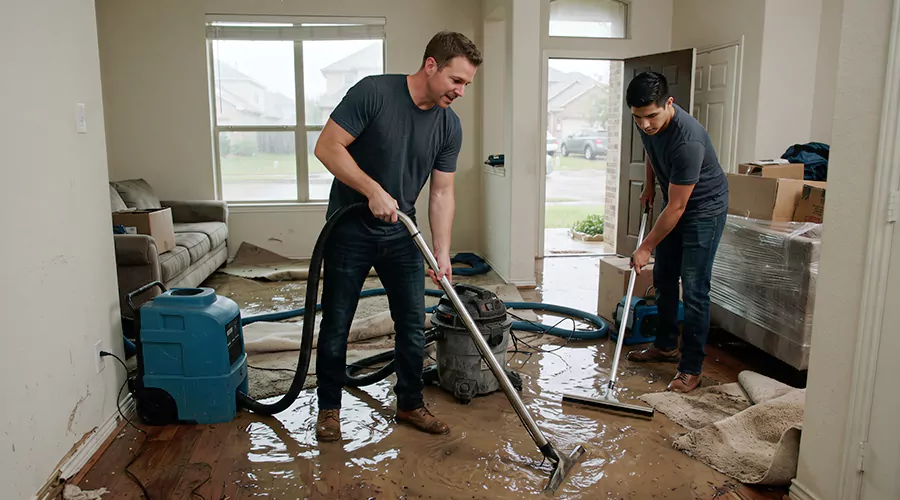
Emergency water removal typically costs $500 to $3,000 for standing-water extraction in 2026, while extraction followed by structural drying often costs about $2,000 to $6,000. Larger contaminated losses can cost more because additional equipment or material removal may be required.
The final price depends on the amount of water and how far it has spread. The water source also matters because sewage requires a different cleanup process than a broken clean-water supply line.
Acting quickly can limit the amount of flooring or drywall that becomes saturated.
What Is Included in Emergency Water Removal?
Emergency water removal focuses on getting standing water out of a property and limiting further moisture damage. The initial service usually covers assessment followed by extraction. Drying equipment may then remain for several days when walls or flooring have absorbed water.
Typical work can include:
- Initial moisture assessment
- Water extraction
- Pumping deep standing water
- Wet vacuuming smaller areas
- Moisture measurements
- Air mover setup
- Dehumidifier setup
- Removal of unsalvageable wet material
- Drying progress checks
Emergency water clean up can stop after extraction in a very small loss. Larger projects usually continue into structural drying. A water-removal estimate should state whether drying equipment is included. A $1,000 extraction quote can look cheaper than a $3,000 estimate simply because the second price includes several days of drying.
How Much Does Water Extraction Cost Per Square Foot?
Water extraction with drying generally costs about $4 to $12 per square foot in 2026. Clean water sits at the lower end. Gray water costs more to handle. Black water reaches the highest range because contamination changes the cleanup process.
| Water Category | Typical 2026 Cost per Sq. Ft. |
|---|---|
| Clean water | $4 to $6 |
| Gray water | $6 to $9 |
| Black water | $9 to $12 |
A 500-square-foot clean-water loss could therefore cost around $2,000 to $3,000 for extraction with drying. The same area affected by black water could reach about $4,500 to $6,000 before reconstruction.
How Does the Size of the Water Loss Affect Cost?
Larger affected areas require more extraction time and drying equipment. However, square footage does not tell the whole story. Water trapped beneath hardwood can create a more difficult project than shallow water across an unfinished concrete floor.
A general planning range looks like this:
| Emergency Scope | Typical 2026 Cost |
|---|---|
| Small localized extraction | $500 to $1,000 |
| One-room water loss | $1,000 to $2,500 |
| Several affected rooms | $2,500 to $6,000 |
| Major contaminated loss | $5,000 to $10,000+ |
These figures represent planning ranges rather than fixed quotes. Emergency water damage becomes more expensive when moisture has moved into wall cavities or insulation.
Does After-Hours Water Removal Cost More?
Yes. Night or weekend emergency response can cost more than work scheduled during normal hours. Current 2026 pricing data shows emergency premiums of roughly 15% to 50% in some situations. That extra charge needs context. Waiting several hours can sometimes allow a small water loss to spread into another room. For example, water from a broken supply line may initially cover only a bathroom floor. Leaving it overnight can allow moisture to reach hallway flooring or the ceiling below. A higher emergency fee may therefore cost less than repairing additional materials later.
What Factors Increase Emergency Water Removal Cost?
The largest price increases occur when water spreads beyond exposed surfaces or becomes contaminated. Difficult access can also raise labor requirements. Longer equipment use adds another cost when saturated materials need several days to dry.
Major cost factors include:
- Total affected square footage
- Depth of standing water
- Water contamination category
- Number of wet rooms
- Saturated wall cavities
- Wet insulation
- Hardwood or subfloor moisture
- Equipment drying time
- After-hours response
- Material removal
Emergency water mitigation can become more involved when water reaches several floors of the property. The visible puddle is not always the best measure of damage. Water beneath flooring can travel farther than the wet area you can see.
How Much Does Drying Add After Water Removal?
Structural drying can raise the total project into the $2,000 to $6,000 range when commercial air movers and dehumidifiers remain for several days. Current guidance indicates that many homes need about 24 to 72 hours of drying after standing water is removed.
Drying may take longer when moisture reaches:
- Hardwood flooring
- Thick subflooring
- Wall insulation
- Enclosed cavities
- Dense structural materials
Emergency water remediation therefore includes more than getting the floor visually dry. Removing equipment too early can leave moisture inside the building. Repairs should wait until affected materials have reached suitable moisture levels.
Does Emergency Water Removal Include Repairs?
Water removal normally covers extraction and may include drying. It does not automatically include replacing drywall or flooring. Reconstruction is often priced separately once the affected structure has dried.
| Work | Water Removal | Later Repair |
|---|---|---|
| Pumping standing water | Usually included | No |
| Extraction | Usually included | No |
| Dehumidification | Often included | No |
| Moisture monitoring | Often included | No |
| New drywall | Usually not included | Yes |
| New flooring | Usually not included | Yes |
| Painting | No | Yes |
Current 2026 water restoration costs average about $3,868 overall, with a broad range of $450 to $16,000 once various cleanup or repair needs are included. Emergency water restoration can therefore cost much more than the initial extraction bill.
How Can You Estimate Your Water Removal Cost?
You can create a rough estimate by measuring the affected area and identifying the likely water source. Multiply the wet square footage by the appropriate $4 to $12 extraction-and-drying range.
Follow this simple process:
- Measure the wet area's length.
- Measure its width.
- Calculate the square footage.
- Identify the water source.
- Use the matching cost range.
- Add later repairs separately.
For example, a 20-foot by 20-foot room contains 400 square feet. Clean-water extraction at $4 to $6 per square foot gives a starting estimate of about $1,600 to $2,400. This calculation is only a budget estimate because hidden moisture can expand the actual scope.
What Warning Signs Usually Mean the Bill Will Be Higher?
Higher costs are more likely when water has already entered several building materials. Continued leakage can also expand the affected area while extraction is underway.
Watch for these signs:
- Water extends into several rooms.
- Drywall feels wet above the baseboard.
- Carpet padding is saturated.
- Hardwood begins cupping.
- Cabinets start swelling.
- Water reaches the ceiling below.
- Insulation becomes wet.
- Sewage enters the property.
- Moisture remains inside walls.
- Standing water has remained for many hours.
Emergency water damage cleanup becomes more expensive as additional materials need drying or removal.
When Should You Call a Professional?
Professional help is appropriate when standing water covers a large area or contaminated water is involved. Electrical exposure is another reason to avoid entering the affected area. Large losses can also require extraction equipment that removes water much faster than household machines.
Consider professional help when:
- Several rooms are flooded.
- Water reaches electrical equipment.
- Sewage is present.
- Outdoor floodwater enters the building.
- Hardwood is heavily saturated.
- Water enters wall cavities.
- The source cannot be stopped.
- Moisture remains after active drying.
A 24 hour water removal response can be useful when delaying extraction would allow water to spread into more materials.
How Can You Reduce Future Emergency Water Costs?
The best way to reduce future costs is to catch leaks before water reaches several rooms. Small preventive measures can reduce the area that requires extraction after a plumbing failure.
Use this routine:
- Locate the main water shutoff.
- Inspect appliance hoses regularly.
- Check beneath sinks each month.
- Test the sump pump before storm season.
- Install leak alarms near water heaters.
- Investigate unexpected water use promptly.
Conclusion
Emergency water removal commonly costs $500 to $3,000 for extraction in 2026, while extraction with structural drying often reaches $2,000 to $6,000. Water category and affected square footage have a major effect on the total. Hidden moisture can increase the scope even after standing water disappears. If contamination or electrical hazards are involved, professional assessment can help determine the safest removal plan.
Frequently Asked Questions
How much does emergency water extraction cost?
Standing-water extraction commonly costs about $500 to $3,000. Larger areas or contaminated water can cost more.
How much does water removal cost per square foot?
Extraction with drying generally costs about $4 to $12 per square foot depending on the water category.
Is emergency water removal more expensive at night?
It can be. After-hours response may carry an emergency premium because crews are dispatched outside normal working hours.
Does homeowners insurance cover emergency water removal?
Coverage depends on the cause and policy terms. Sudden accidental plumbing leaks are often treated differently from outside flooding.
How long does emergency drying take?
Many water-damaged areas need about 24 to 72 hours of active drying after extraction. Heavy saturation can take longer.
Is water extraction enough after a flood?
Not always. Walls or flooring may remain wet after standing water is removed, so structural drying may still be needed.